
Tarras Valley Deer Management Update

Over the past year we have been undertaking herbivore impact assessment across the reserve which has taken us to some of the far corners of the Tarras Valley to help get a scientific landscape-scale picture of what’s going on. We have been using the industry standard Herbivore Impact Assessment Methodology which helps to assess grazing pressure from herbivores like sheep, deer and feral goats.
This is focused on monitoring impact in wood pasture, existing woodland, regenerating mixed habitats and riparian zones. It looks at what is being browsed, and to what level, all to help give an indication about whether the system is in balance or not and inform sustainable management approaches.
Herbivore grazing is an important tool in helping to create a diverse and dynamic mosaic of habitats where nature can recover and thrive, but it does require careful management to keep things in healthy balance. Over-grazing can be just as damaging as under-grazing on sensitive or recovering habitats.
The sort of surveys we have been carrying out help determine how to get the balance right between animal disturbance and vegetation succession – which, if achieved, helps to generate a rich habitat complexity, and protects and boosts biodiversity.
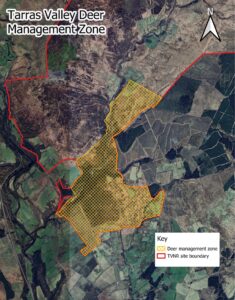
The initial results of our survey plots across the Valley have highlighted that there are areas of the reserve which are under significant grazing pressure. There is a need to intervene in some areas with culling to help reduce the pressure and encourage a more sustainable balance on the land.
We are going to be undertaking another year of deer management on the reserve working with an experienced and licensed stalker to help sustainable manage our deer numbers in the areas which we have noted as having higher levels of grazing pressure. All best practice guidance for safety and animal welfare will be followed. The culled deer will be going into the human food chain using a local community deer larder and approved game dealers.
Deer are an important part of the natural ecosystem, but without any natural predators, their numbers are able to quicky increase which then has knock on impacts on the land and animal health. This management activity is about sustainably managing numbers and not about removing deer entirely from the landscape.
The management will be taking place within the defined legal seasons for managing deer by culling which are:
- Female Roe Deer – 21st October – 31st March
- Male Roe Deer – All year around (on Tarras Valley we are going to be managing male roe deer from 1st August until 31st March)
You can find out more information about deer management guidelines for Scotland on the Naturescot website here Deer management in Scotland – Frequently Asked Questions (FAQs) | NatureScot
We will keep reviewing our approach going forward to assess impact on the ground using our ongoing herbivore impact assessment to ensure balance with the land’s carrying capacity, and to ensure the long-term health and welfare of the reserve’s herbivore populations.
If you do have any questions please do get in touch with us at hello@tarrasvalleynaturereserve.org.