

Summer Survey Update

Nature and Climate
The ecology surveys have commenced in earnest, with breeding bird, mammal field sign, butterfly, herbivore impact assessment, vegetation, reptile and amphibian surveys already underway. Hydrology, bat and otter surveys are also planned for later this year. In addition to the surveys, camera traps and bioacoustic devices have been installed across the reserve to non-invasively monitor species diversity, and general activity, of both mammals and birds.
The data collected this year, both from the surveys and devices, will provide an insight into the current species diversity, abundance and habitat condition of the reserve. The view is for the data to be collected annually, as part of an ongoing monitoring framework, enabling any ecological changes to be tracked over the long-term. With the exciting restoration projects on the horizon, including the river restoration project, it will be exciting to monitor the changes that occur!
There have been numerous stand-out wildlife records from the surveys so far, with too many to mention in entirety here!
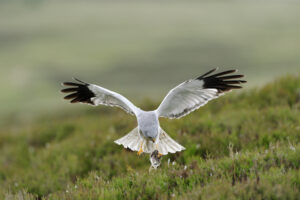
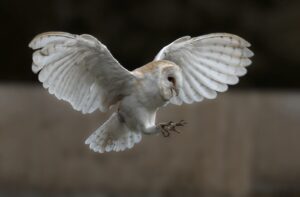
So far, a total of 67 breeding bird species have been recorded. The highlights include the confirmation of breeding barn owl Tyto alba, merlin Falco columbarius, hen harrier Circus cyaneus, cuckoo Cuculus canorus, pied flycatcher Ficedula hypoleuca, whinchat Saxicola rubetra, curlew Numenius arquata and grasshopper warbler Locustella naevia. Woodcock Scolopax rusticola, goshawk Accipiter gentilis, green woodpecker Picus viridis, and spotted flycatcher Muscicapa striata are also notable sightings and probably breeding.
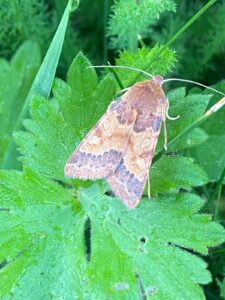
Notable invertebrates, observed either during the butterfly surveys or as incidental sightings, have included painted ladyVanessa cardui, emperor moth Saturnia pavonia, common sexton beetle (a ‘burying beetle’) Nicrophorus vespilloides, leopard slug Limax maximus and woodland dor beetle Anoplotrupes stercorosus, a common dung beetle.
Adder Vipera berus, slow worm Anguis fragilis and common lizard Zootoca vivipara continue to be regularly found under survey mats near Laverock bird hide, with incidental sightings occurring across both the woodland and upland habitats. The lower Tarras ponds have been awash with tadpoles, with both froglets and toadlets recently emerging and beginning to explore the terrestrial landscape!