

Wonderful moths of the Tarras Valley Nature Reserve

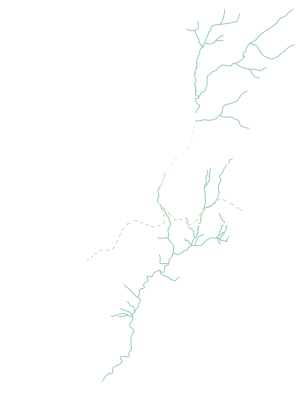
Tarras Valley Nature Reserve
Species discovered
302
Macro
236
Micro
66
WONDERFUL MOTHS OF TARRAS VALLEY NATURE RESERVE
A blog by John Halliday
Moths are vitally important for biodiversity with around 2,500 species in the UK, including 1,300 species in Scotland and 1,200 in Dumfries and Galloway. Moths (adults and caterpillars) are an important element of the food chain, being prey for a wide range of birds, bats and other insectivorous animals. They are super pollinators and indicators of a healthy ecosystem. When their numbers drop, the ecosystem is in trouble.
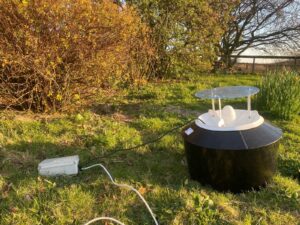
British moths are in severe and rapid decline mainly due to habitat degradation and climate change. Tarras Valley Nature Reserve(TVNR) has a vital role for biodiversity conservation. The diversity and abundance of moths on TVNR will help inform habitat management and conservation strategies on the Reserve. Moths come in all shapes, sizes and colours, many of them very beautiful. They are found everywhere but are rarely seen as most fly at night. Moths are attracted to light and the most effective way to catch and study moths is to use portable light traps. The traps are set in the evening and the moths are identified and released early the next morning.
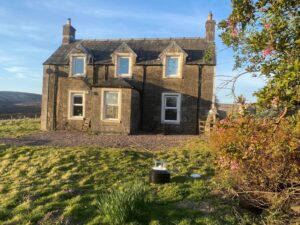
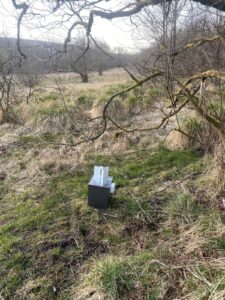
The creation of TVNR in 2021 has provided an opportunity to carry out a baseline survey of moths and to establish a benchmark to assess changes in abundance and diversity that occur over time. Moth trapping commenced in 2022 using a small battery operated Heath trap in the Lower Tarras Woods and a more powerful mains operated Robinson trap at Cronksbank. Trapping has continued at both sites on an annual basis from March until October. The trap in Lower Tarras is situated in a wet woodland clearing and the Cronksbank trap in the garden surrounded by rough grassland and woodland. Abundance and diversity of moths caught in the two traps are not comparable as the Robinson trap is more powerful and attracts more moths.
Moths are often divided into two broad categories, macro-moths which are typically larger in size, and micro-moths which are typically smaller. Over two-thirds of common and widespread macro-moth species in the UK have declined during the past 50 years, 71 of which are listed in the UK Biodiversity Action Plan (BAP).
A total of 302 moth species (236 macros and 66 micros) have now been caught on TVNR, 29 of which are included on the BAP list of common, widespread but rapidly declining species. This represents 42% of Scottish macro-moth species. Sixteen are regionally scarce and one nationally scarce.

SIGNIFICANT RECORDS
Northern Drab
Caught at Cronksbank in April 2022, this was the first record for Dumfries and Galloway (D&G) and only the third for Scotland. It was only caught again on one occasion at Cronksbank in March 2025.
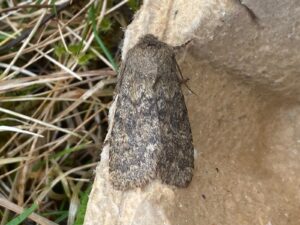
Brindled Ochre
A BAP species which has undergone a severe long-term decrease in abundance and distribution. Caught on only two occasions at Cronksbank in March and September 2023, it is very scarce in D&G.
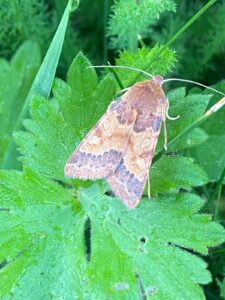
Flounced Chestnut
Another BAP species which has undergone a major long-term decrease in abundance and distribution. Caught just recently at Cronksbank on two occasions in August and September 2025, it is scarce in D&G.
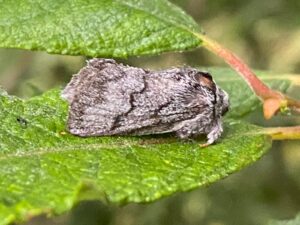
Pale Eggar
A BAP species showing substantial long-term declines in distribution and abundance. Though scarce in D&G, there have been several records at Cronksbank in August 2023 and 2024 and July 2025 and in Lower Tarras in August 2023.
Tissue
Very rare in D&G, this moth has only been caught once in Lower Tarras in May 2023. This suggests it may have very specific habitat requirements.
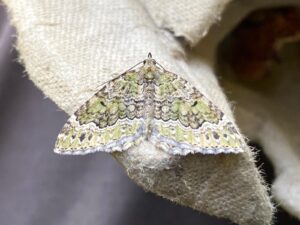
Beech-green Carpet
Interestingly this is another species which has only been caught in the Lower Tarras woods. Though scarce in D&G, there are several records here in July 2023 and 2025 and August 2024.
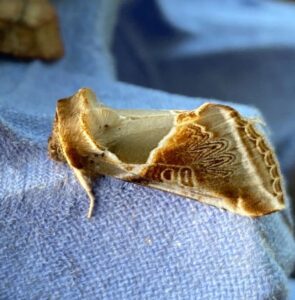
Buff Arches
Scarce in D&G, this beautiful moth has been caught at Cronksbank in July 2022 and 2025 and Lower Tarras in July 2024.

Garden Tiger
Though widespread in Britain, this BAP species has declined severely in abundance due to climate change, particularly warm wet winters and springs. Caught at Cronksbank and Lower Tarras in July 2022, subsequent records are only from Cronksbank.
WEIRD AND WONDERFUL MOTHS
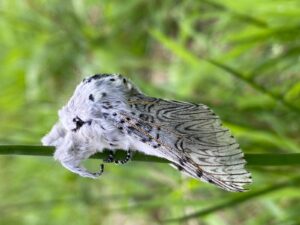
Puss Moth
A large furry moth only recorded once in Lower Tarras in May 2022.
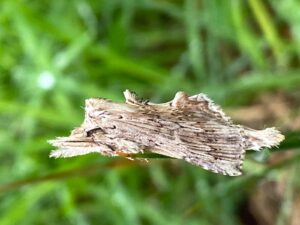
Pale Prominent
Resembling a fragment of broken wood, this species has been recorded annually in Lower Tarras only.
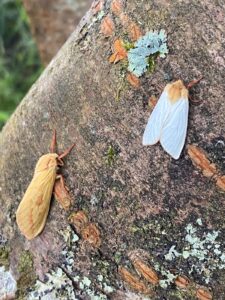
Ghost Moth
A BAP species common in D&G but only recorded on two occasions at Cronksbank in June 2023.
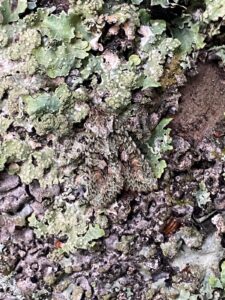
Brindled Green
A master of camouflage, this moth is scarce in D&G and was only recorded recently in August 2025 at Cronksbank.

Four years trapping on the Tarras Valley Nature Reserve has produced an impressive list of moths, including many scarce and declining species. The high species abundance and diversity reflects the richness of habitats present on the Reserve. This study has contributed greatly to moth distributional records in Dumfries and Galloway and new records are still being added every year. It is recommended that moth trapping should continue on an annual basis to assess long-term changes in abundance and diversity. It will be particularly interesting to investigate the habitat requirements of scarce and declining species which will help inform conservation management strategies on the Reserve.